
The ride itself was ordinary enough that I almost forgot it by the time I stepped out. No dramatic scenery, no memorable destination. It was a short trip across the city, taken on a weekday afternoon when the streets were neither busy nor quiet, suspended somewhere in between.
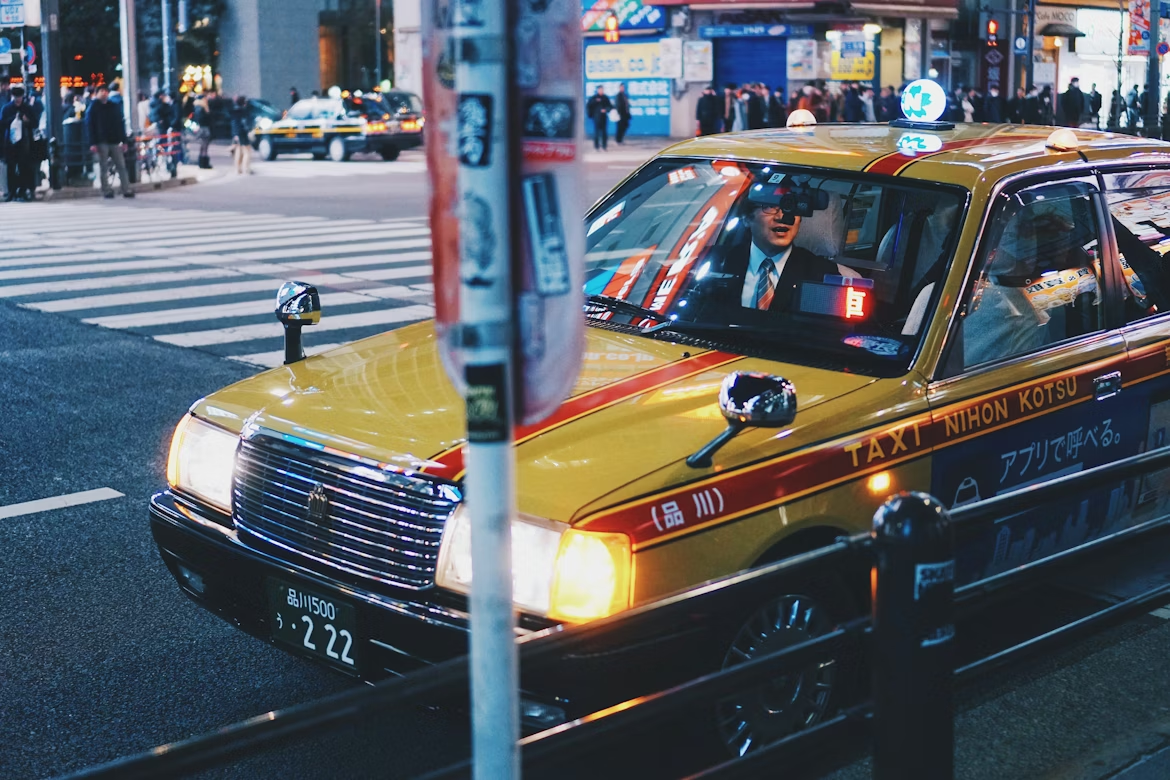
I remember choosing the back seat, more out of habit than intention. The driver was a middle-aged man wearing a neatly pressed light-blue shirt, the kind you see on people who take quiet pride in appearing put together. His dashboard was clean, almost deliberately so, except for a small photo tucked into the corner—two children standing in front of what looked like a school gate. I noticed it without thinking much about it.
For the first few minutes, we drove in silence. The radio was on low volume, playing a song I didn’t recognize. Outside, storefronts passed by in a blur of signs and reflections. I checked my phone once, then put it away. There was nothing urgent waiting.
At a red light, the driver sighed—not loudly, just enough to be noticed if you were paying attention.
“Long day?” I asked, mostly to fill the space.
He smiled in the rearview mirror. “Not long,” he said. “Just… full.”
That word stayed with me, though at the time I didn’t know why.
He told me he had been driving since early morning. Not because he had to, but because he preferred starting before sunrise. “The city is different then,” he said. “People are quieter. Even the traffic feels more polite.”
I nodded, though I wasn’t sure if I fully understood. My days usually began already rushing.
As we moved again, he spoke about his previous job. He used to work as a warehouse supervisor—managing schedules, deliveries, people. The pay was stable, the routine predictable. On paper, it made sense. But after more than ten years, he realized he was constantly bringing work home, even when he wasn’t physically there.
“I was always counting something,” he said. “Boxes, hours, mistakes. Even at dinner.”
Driving, he explained, gave him a strange kind of relief. Each ride had a clear beginning and end. Each passenger carried their own story, but none of it followed him home unless he chose to remember it.
“That sounds freeing,” I said, without thinking.
He laughed softly. “Free is a big word. I’d say… lighter.”
We stopped again at another light. A pedestrian crossed slowly, checking their phone, oblivious to the cars waiting. The driver didn’t seem annoyed. He waited patiently, hands resting loosely on the wheel.
“I used to think I needed to be somewhere all the time,” he continued. “Now I just need to be here.”
The ride ended soon after that. I paid, thanked him, and stepped out onto the sidewalk. Within seconds, the noise of the street returned—horns, footsteps, conversations overlapping. The car merged back into traffic and disappeared.
At first, the conversation faded the way most brief exchanges do. I walked toward my destination, mentally shifting gears. Tasks waited. Messages would pile up. The day would continue.
But later that evening, while washing dishes, the memory returned unexpectedly. His word echoed again: full.
I realized how often I described my own days as “busy” or “packed,” as if fullness were something to endure rather than examine. Yet his version of fullness sounded different. It wasn’t about pressure or overload. It was about presence—about allowing each hour to stand on its own instead of constantly leaning forward into the next one.
Over the following days, I caught myself replaying small parts of the ride. The photo on the dashboard. The calm way he waited at lights. The fact that he spoke without trying to convince me of anything. He wasn’t offering advice. He was simply describing a life adjusted, not transformed.
That distinction mattered.
I began noticing how many of my own days lacked clear endings. Work bled into rest. Thoughts spilled into moments meant for pause. Even when nothing demanded my attention, my mind behaved as if something always might.
One afternoon, stuck in traffic myself, I remembered how the driver had rested his hands when stopped, as if stillness were not a problem to solve. I tried it. Instead of checking my phone, I watched the light change. I noticed the rhythm of cars starting and stopping, the small choreography of impatience and patience playing out across lanes.
Nothing profound happened. Yet the tension in my shoulders eased slightly. The moment passed without leaving me more tired than before.
That’s when I understood why the ride stayed with me.
It wasn’t because it changed my direction, but because it shifted my attention. It showed me that reflection doesn’t always arrive during deliberate pauses or carefully planned retreats. Sometimes it appears between destinations, carried quietly by strangers whose lives intersect with ours for a few minutes and then move on.
I never saw that driver again. I don’t know if his days are still lighter, or if new pressures have found their way into his routine. What I know is that a single ride altered the way I noticed my own movement through the city—and through time.
Since then, I’ve stopped expecting insight to announce itself loudly. I look for it instead in ordinary transitions: elevators, queues, short walks, brief conversations that end before they fully begin. These moments rarely ask for attention, but they offer it generously when we slow enough to receive it.
That ride didn’t give me answers. It gave me a question I hadn’t been asking: What if being full doesn’t mean being overwhelmed?
I’m still thinking about that.