


For a long time, I thought reflection belonged to special moments—long walks, empty notebooks, deliberate pauses scheduled between responsibilities. Ordinary days felt too noisy, too fragmented to offer anything meaningful. I assumed insight needed space to arrive.
What I slowly learned was that reflection doesn’t wait for permission. It appears in places we barely register, in moments that feel too small to matter.
A Half-Finished Conversation
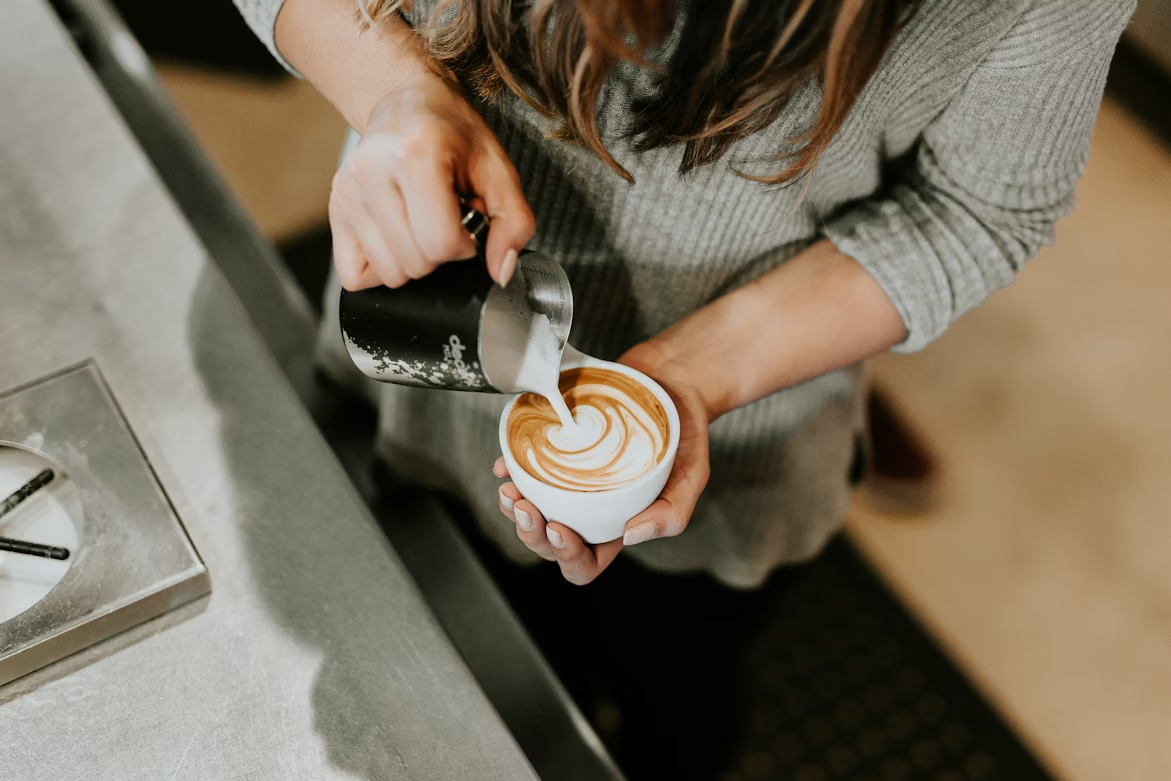
I met an old friend on a weekday afternoon, choosing a café neither of us particularly liked because it was close to both our offices. The place was loud enough to discourage long pauses. Cups clinked, chairs scraped the floor, and conversations overlapped without apology.
We talked the way people do when time is limited. Work updates. Mutual acquaintances. Small complaints delivered lightly, so they wouldn’t linger. Toward the end, as we were gathering our things, my friend mentioned feeling tired. Not the end-of-day kind, but something slower and heavier.
I remember nodding, already thinking about the meeting I had next. I said something generic—encouraging, neutral—and stood up. The moment passed without friction.
Later that night, while brushing my teeth, that sentence returned to me with surprising clarity. Not the words themselves, but the pause that followed them. I realized I had moved past it too quickly, mistaking familiarity for understanding.
Reflection didn’t happen in the café. It happened hours later, alone, when nothing else demanded my attention. The quiet art of reflection, I began to see, often starts after the moment has technically ended.
Sitting Through the Wait
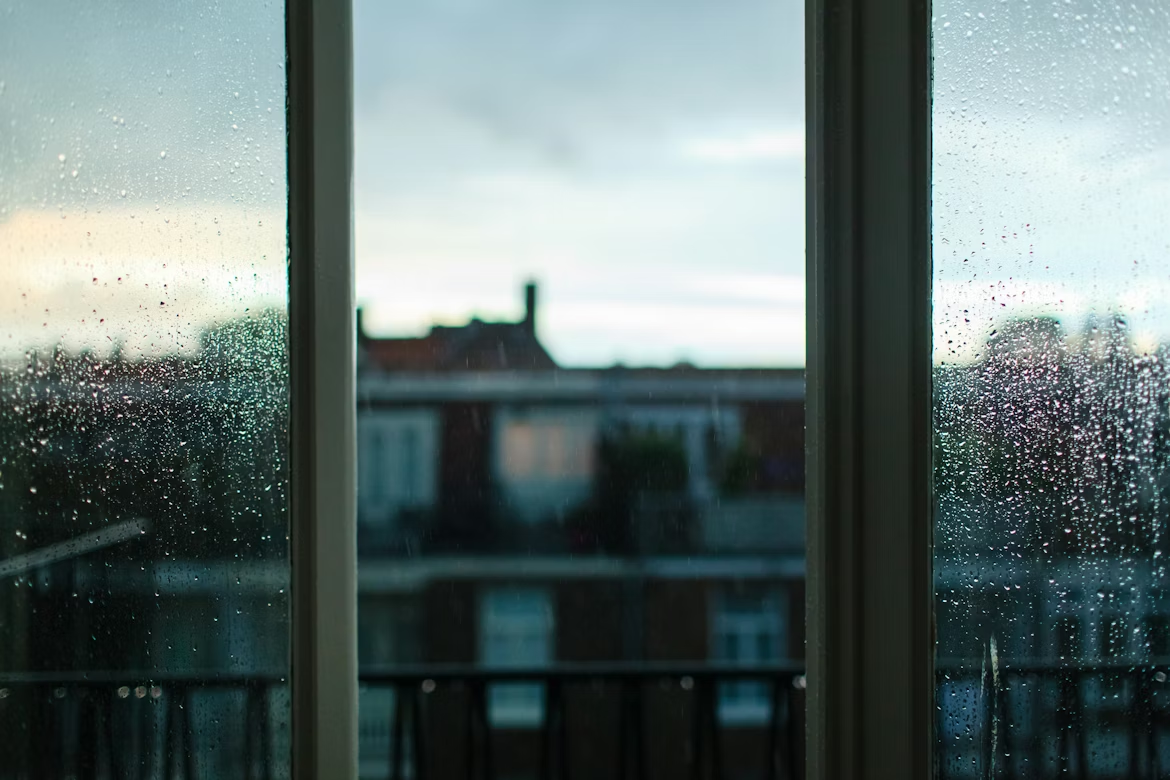
A few days later, I found myself waiting for an appointment that ran behind schedule. The chair was too low, the air slightly stale. A television murmured in the corner, ignored by everyone in the room.
I reached for my phone out of habit, unlocked the screen, then locked it again. There was nothing I actually wanted to check. So I sat there, hands resting awkwardly on my lap, feeling vaguely restless.
Without distraction, small things became noticeable. The way my foot tapped without my permission. The tension in my shoulders. The irritation that rose simply because time wasn’t moving the way I expected it to.
Nothing about the wait was important. Yet it revealed how uncomfortable I was with being delayed, even briefly. I wasn’t upset about the appointment. I was unsettled by the loss of momentum.
That realization didn’t feel insightful or transformative. It felt mildly embarrassing. Still, it stayed with me. Reflection, I learned, doesn’t always feel meaningful in the moment. Sometimes it just feels honest.
An Ordinary Evening, Left Unfilled
One evening, after finishing everything I had planned to do, I didn’t immediately move on to the next thing. The kitchen light was still on. The room smelled faintly of soap. I stood there longer than necessary, unsure what to do next.
Normally, I would have filled the space without thinking. A screen. Music. Something to occupy the gap. Instead, I sat at the table, elbows resting where they always did, noticing the quiet hum of the refrigerator.
At first, nothing happened. Then, gradually, thoughts surfaced that had been waiting for less crowded conditions. A comment I had brushed off earlier in the week. A task I kept postponing without a clear reason. A vague sense of dissatisfaction I hadn’t named.
None of it arrived with urgency. It simply showed up, one piece at a time. That was when I understood something I had overlooked before: reflection doesn’t demand intensity. It requires availability.
What Quiet Moments Leave Behind
These moments weren’t connected by meaning, only by scale. They were small, unremarkable, easy to dismiss. Yet each left something behind once I stopped rushing past them.
The quiet art of reflection lives in what lingers. A sentence that returns unexpectedly. A reaction that feels disproportionate. A silence that reveals more than noise ever could.
I no longer believe reflection requires stepping away from life. It happens inside it, folded into conversations, delays, and evenings that look exactly like every other one.
Now, when something small refuses to fade, I pay attention. I don’t rush to interpret it or turn it into a lesson. I let it stay long enough to show me why it matters.
Often, that is enough.