

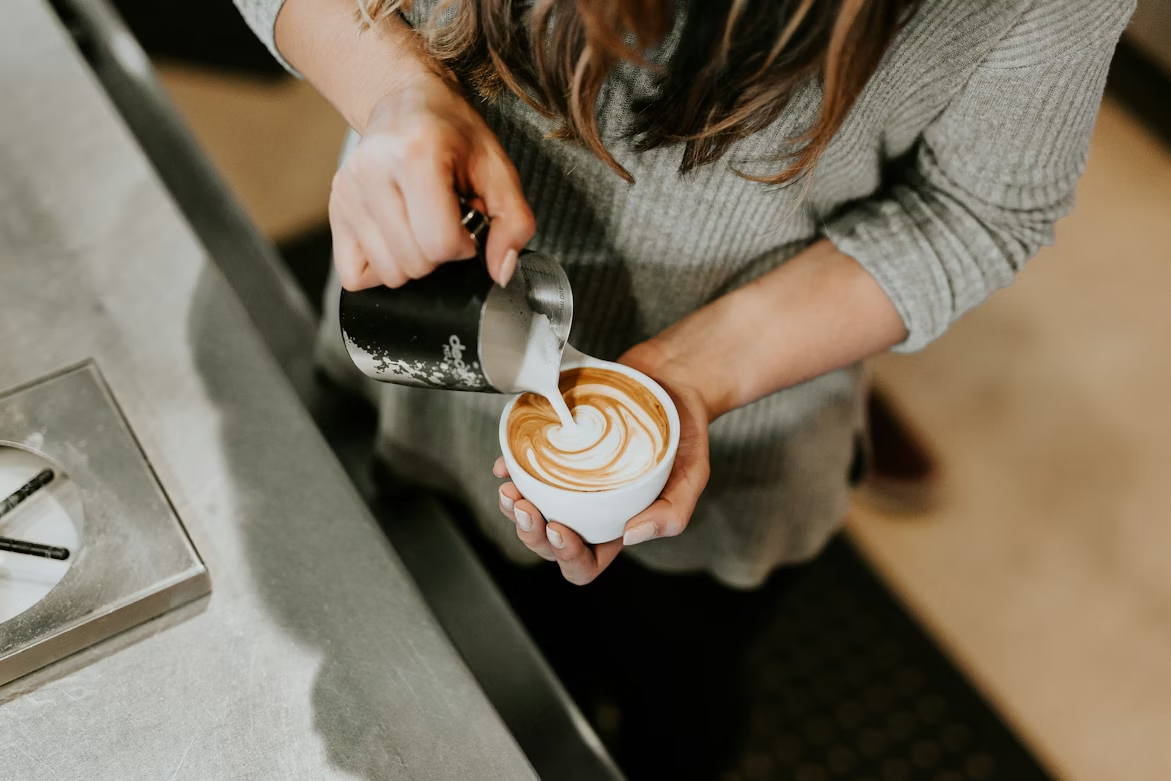


I first noticed her on a rainy Tuesday morning. The café was quiet, the kind of early hour when the city itself seemed half asleep. Steam rose from the espresso machine in slow, curling plumes, filling the small space with the scent of roasted beans. She moved behind the counter with an ease that made the routine feel like dance steps I didn’t know existed. Not just the barista who poured my coffee, I realized, but someone who noticed the small things—the way I fumbled my umbrella, the hesitation in my voice when ordering, even the slight tremor in my hand as I reached for my wallet.
I came here every morning, almost out of habit. A brief pause before the day began. I rarely spoke beyond the standard greetings, my attention divided between the newspaper I carried and the flickering screen of my phone. But that Tuesday, she said something different. “Looks like the city forgot its umbrella policy today,” she joked, glancing at the rain streaking down the window. A small thing, yes, but it pulled me into the moment. I smiled, a real one, and felt the first warmth of awareness for the day.
The conversation started there, in fragments. She asked if I’d tried the new seasonal blend. I said I hadn’t, and instead of the usual perfunctory nod, she described the flavor in a way that made me taste it in my mind: notes of caramel, a hint of dark chocolate, a brightness I wouldn’t have expected. And then, almost casually, she added, “It’s funny how people come in, rushing, thinking coffee is just coffee. But it’s more than that. It tells stories.”
I paused, spoon halfway to my lips. Stories? I hadn’t thought of a latte this way before. She went on, talking about regulars who always ordered the same drink, how they came in with a mood tucked behind the counter like a scarf, and how small gestures—a smile, a remembered name—could tilt their day. I wanted to leave, to rush to the office like I always did, but I stayed. Something in her tone invited attention without demanding it.
Over the next few minutes, she shared snippets of people she had seen: the elderly man who always bought a black coffee and hummed under his breath, the young woman who read poetry on Tuesdays, the exhausted student who had learned to make notes in line while waiting for her cappuccino. Each story was brief, almost incidental, yet full of texture. I realized that for the first time, I was paying attention not just to what she said, but how she said it, how she watched, how she remembered.
When my phone buzzed with a calendar reminder, I almost picked it up—but the thought of interrupting this unnoticed, small communion felt wrong. I didn’t. I let the conversation continue, letting her words settle in me. It wasn’t an epiphany; it was quieter. A gentle nudge, like the steam curling from the cup. I began to notice things I had ignored: the rhythm of her hands, the way she wiped the counter, the subtle way she adjusted a cup that had been slightly off-center. Each gesture carried attention, presence, reflection.
I left the café later than usual, carrying a latte that was warmer in my hands than I expected. Outside, the rain had softened, the sidewalks glistening. My mind was different. Not clearer, exactly, but attuned to subtle shifts. I thought about how often I move through life mechanically, barely noticing the people who touch it—even briefly. How often I rush past moments that could be small teachers if I only stopped.
Weeks passed, and I returned almost every morning. Each time, she noticed something new—how my coat had changed, a book I carried, the tension that had loosened slightly in my shoulders. And each time, the conversation, no matter how small, lingered longer than it should have. I found myself replaying phrases, recalling how she had described a caramel note or remembered a regular’s birthday. Her attentiveness reminded me that reflection is rarely dramatic. It lives in details, gestures, and the gentle awareness of ordinary interactions.
One morning, she confided that she had been exhausted lately. A long night at home, a chaotic week, a city full of indifferent customers—but she still came to work with the same care. I listened. Really listened. And I realized that the act of noticing, of being present even when tired, is itself a form of generosity. Her reflection, in the way she described the world, shaped mine.
That day, I left the café thinking about how small moments—shared smiles, remembered names, casual words—could resonate far beyond their immediate context. Life, I understood, is made of these echoes. The barista spoke more than coffee; she spoke of attention, care, and the often-unseen impact of simply being present.
Sometimes, the quietest conversations are the ones that stay with us the longest. And I carry those mornings with me, the warmth of a cup in hand, a voice that remembered more than I expected, and the lesson that reflection doesn’t always need a notebook—it needs presence.